You want to feel safe and confident wherever you go. Knowing how to practice self defense isn’t just about fighting skills—it’s about protecting yourself before danger even arises.
Imagine having simple, effective techniques at your fingertips that can help you stay calm, avoid threats, and if needed, defend yourself quickly. You’ll discover easy steps and practical tips to start building your self-defense skills today. Ready to take control of your safety?
Keep reading to learn how you can become your own best protector.
Key Self-defense Principles
Key self-defense principles form the foundation of personal safety. They guide how to recognize danger and respond effectively. Understanding these principles helps prevent harm before it happens. Practice them daily to build confidence and security.
Awareness And Alertness
Stay aware of your surroundings at all times. Notice people, exits, and possible threats nearby. Alertness means focusing on the present moment. Avoid distractions like phones or loud music. Being alert helps spot danger early.
Avoidance And Anticipation
Steer clear of risky places or situations. Plan your route and avoid poorly lit or isolated areas. Anticipate how others might behave. Trust your instincts if something feels wrong. Avoiding trouble is the best defense.
De-escalation And Disengagement
Use calm words to reduce tension. Speak softly and keep body language non-threatening. Walk away from conflict if possible. Disengage before a situation turns violent. Staying peaceful lowers the chance of harm.
Deterrence And Action
Show confidence through posture and eye contact. Use a loud voice to draw attention if threatened. Be ready to defend yourself if needed. Quick, decisive action can stop an attacker. Practice basic moves to respond effectively.
Essential Safety Habits
Building essential safety habits forms the foundation of effective self-defense. These habits help you prevent danger before it starts. They train your mind and body to react calmly and confidently in risky situations.
Practicing these habits daily makes safety a natural part of life. Small actions can keep you alert and ready. Let’s explore key habits that improve your personal security.
Situational Awareness Techniques
Situational awareness means noticing your surroundings all the time. Look around and know who is near you. Check exits and places where help might be found.
Keep your head up and avoid distractions like phones. Scan areas quickly but regularly. This habit helps spot trouble early and avoid it.
Reading Body Language
Body language reveals a person’s mood and intentions. Watch for signs like tense muscles, clenched fists, or aggressive stances. These can warn of possible threats.
Notice if someone avoids eye contact or moves closer than usual. Understanding these signals helps you react before things escalate.
Setting Boundaries
Clear boundaries show others what behavior you accept. Use firm words and confident gestures to say “stop” or “stay back.”
Practice speaking up calmly but firmly. Boundaries prevent misunderstandings and reduce chances of conflict.
Trusting Your Instincts
Your gut feelings are powerful safety tools. If something feels wrong, act on it quickly. Don’t ignore uneasy feelings or doubts.
Trusting instincts can mean leaving a place or asking for help. This habit keeps you one step ahead of danger.
Physical Self-defense Basics
Physical self-defense forms the foundation of personal safety skills. It builds confidence and prepares you for unexpected threats. Learning the basics helps you respond quickly and effectively. Practice simple moves regularly to improve muscle memory and reaction time.
Start with core techniques that protect your body and create distance. These skills work best when combined with awareness and calm thinking. Physical self-defense is not about fighting but surviving and escaping danger.
Defensive Postures
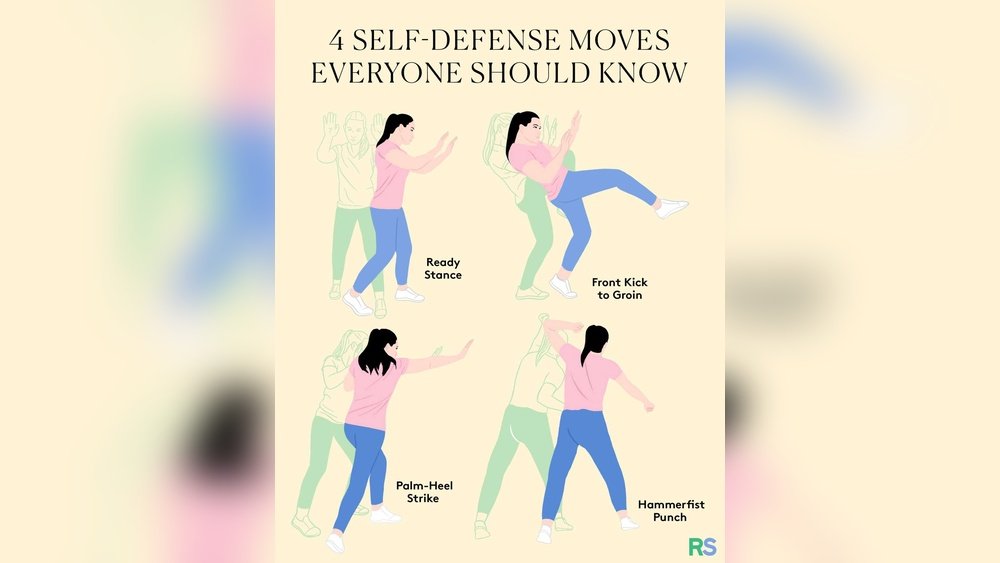
Defensive postures protect vital parts of your body. Stand with your feet shoulder-width apart for balance. Keep your hands up near your face to block attacks. Slightly bend your knees to stay flexible and ready to move. This stance helps absorb impact and prepares you to strike or escape.
Effective Striking Techniques
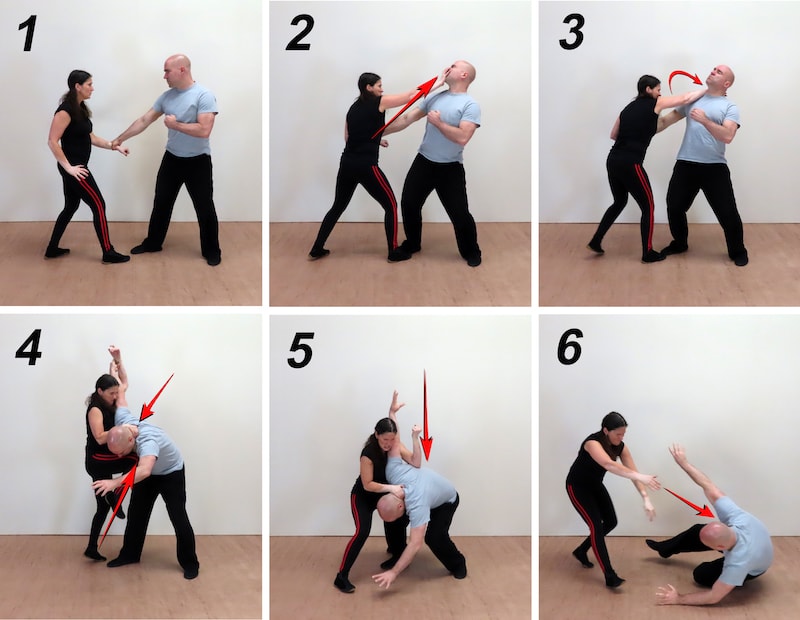
Striking aims to stop an attacker quickly. Use your palms, fists, elbows, and knees as weapons. Target sensitive areas like the nose, throat, and groin. Keep your strikes fast and controlled to avoid injury. Practice simple punches and palm strikes to build power and accuracy.
Escaping Holds And Grabs
Learn to break free from common grabs. Use your body weight to shift and create space. Twist your wrist or fingers to weaken the attacker’s grip. Aim for vulnerable spots such as eyes or throat to distract them. Practice these escapes slowly, then increase speed as you improve.
Using Everyday Objects
Everyday items can become effective tools for defense. Keys, pens, or bags can increase your reach and cause pain to an attacker. Hold objects firmly and aim for sensitive areas. Practice holding and using these items confidently. They add an extra layer of protection when needed.
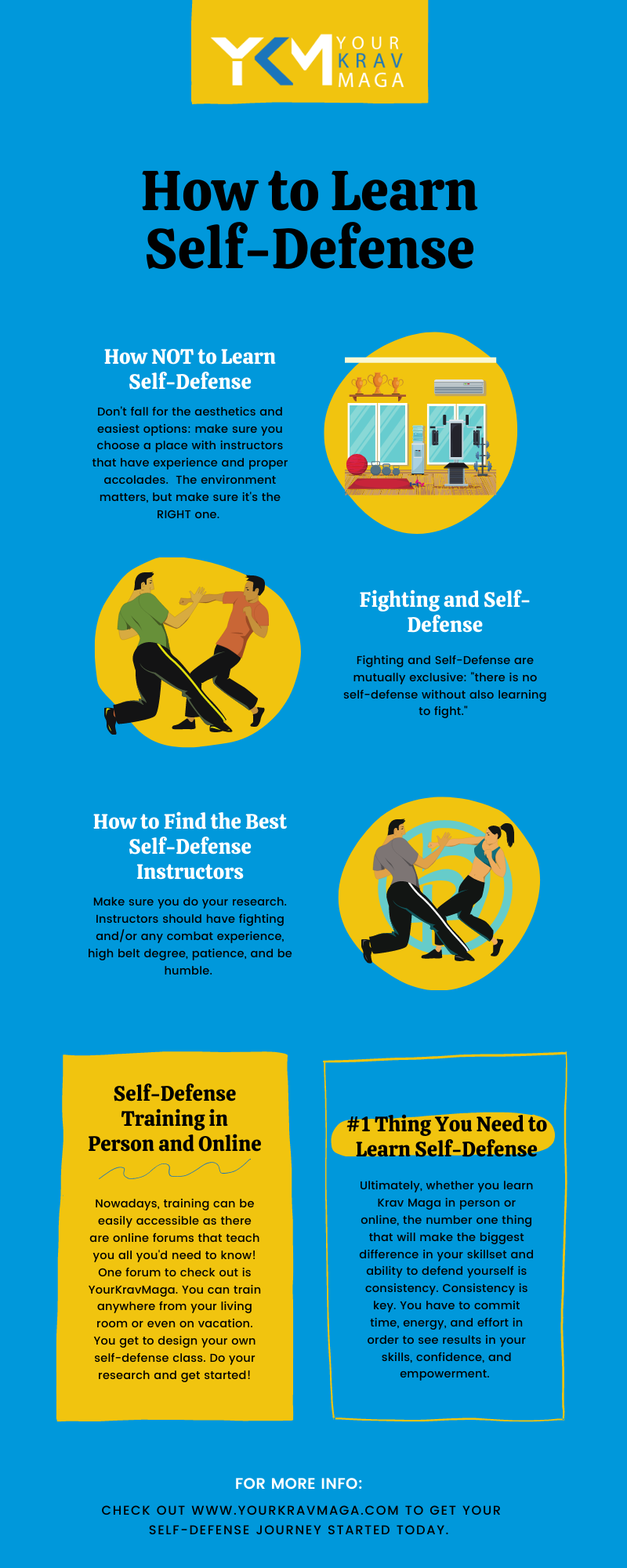
Credit: www.yourkravmaga.com
Choosing A Training Style
Choosing the right training style shapes your self-defense skills. Each style offers unique techniques and focuses. Select one that matches your needs and comfort level. Training should be practical and build your confidence. Understanding different styles helps you make an informed choice.
Krav Maga Fundamentals
Krav Maga is a practical self-defense system from Israel. It focuses on real-life situations and quick, effective responses. Techniques include striking, blocking, and escaping holds. This style teaches you to use your body’s natural weapons. It is simple and easy to learn for beginners.
Brazilian Jiu-jitsu Basics
Brazilian Jiu-Jitsu (BJJ) focuses on ground fighting and submissions. It teaches controlling an opponent using leverage and technique. BJJ helps smaller people defend against larger attackers. It is great for learning escapes and holds. Training improves strength, balance, and patience.
Taekwondo And Karate Moves
Taekwondo and Karate are traditional martial arts with striking and kicking techniques. They build speed, power, and flexibility. Both styles teach discipline and respect alongside self-defense moves. They include blocks, punches, and high kicks. Regular practice boosts coordination and confidence.
Boxing And Wrestling Skills
Boxing teaches powerful punches and footwork for defense and attack. It improves hand-eye coordination and stamina. Wrestling focuses on grappling and controlling an opponent. It builds strength and balance through takedowns and holds. Combining both styles enhances overall fighting ability.
Training At Home
Training at home offers a flexible and safe way to improve self-defense skills. It lets you practice regularly without the need for a gym or class. You can build confidence and muscle memory in a familiar space. The key is to stay consistent and focused on your goals.
Drills And Partner Exercises
Drills help sharpen your reflexes and movements. If you have a partner, practice simple attack and defense moves. Take turns being the attacker and defender. This builds timing and control. Use slow, controlled motions to avoid injury. Repeating these exercises improves your reaction speed and technique.
Using Instructional Videos
Instructional videos provide clear steps to follow. Choose videos made by trusted self-defense experts. Watch carefully and pause to practice each move. Videos let you learn new techniques at your own pace. Replay difficult parts until you feel confident. This method works well for beginners and advanced learners alike.
Practicing Weapon Handling
Handling simple weapons can boost your defense skills. Practice with items like a flashlight or a stick. Learn how to hold and swing safely. Focus on control and precision, not strength. This training builds your confidence in using everyday objects for protection. Always practice in a safe space to avoid accidents.
Building A Routine
Consistency is important for steady progress. Create a daily or weekly training schedule. Mix drills, video lessons, and weapon practice. Keep sessions short but focused, about 20 to 30 minutes. Track your improvement to stay motivated. A regular routine makes self-defense skills part of your lifestyle.
Mental Preparation
Mental preparation is key to effective self defense. It shapes how you react and stay calm in tough situations. Strengthening your mind builds quick reactions and clear thinking. This section covers ways to prepare mentally for self defense.
Building Confidence
Confidence helps you face danger without fear. Practice skills often to feel ready. Trust your training and instincts. Speak clearly and hold your head high. Confidence can prevent threats before they start. It shows you are alert and aware.
Stress Management
Stress can cloud your judgment. Learn to control your breathing to stay calm. Slow, deep breaths reduce panic. Practice relaxation techniques daily. Managing stress keeps your mind sharp. It helps you stay focused during an attack.
Reacting Under Pressure
Pressure can freeze your actions. Train with timed drills to improve speed. Repeat scenarios to build muscle memory. Act quickly and decisively without overthinking. Staying calm under pressure saves time and energy. This skill increases your chances to escape safely.
Scenario Visualization
Imagine different self defense situations clearly. Picture yourself staying calm and acting fast. Visualize safe escapes and effective moves. This mental rehearsal prepares your brain for real events. Visualization builds confidence and reduces fear. It trains your mind to handle threats better.
Safety Tools And Accessories
Using safety tools and accessories boosts your confidence and protection. These items help you stay prepared during unexpected situations. Choosing the right tools makes a big difference.
Choosing Tactical Flashlights
Tactical flashlights are strong and easy to carry. They provide bright light to see clearly at night. The light can also blind an attacker temporarily. Look for models with a durable body and a good grip. Compact size helps you hold it firmly. Practice using it to feel comfortable in emergencies.
Pepper Spray And Alarms
Pepper spray is an effective tool for self-defense. It causes pain and stops attackers from advancing. Keep it within easy reach and learn how to use it safely. Personal alarms make a loud noise to attract help. They scare off attackers and alert people nearby. Both tools are small and easy to carry daily.
Personal Safety Apps
Personal safety apps add extra security to your phone. They can send your location to trusted contacts quickly. Some apps have emergency buttons to call for help instantly. Choose apps with good reviews and easy interfaces. Regularly update the app to ensure it works properly when needed.
Legal Considerations
Check local laws before carrying any self-defense tool. Some items may be illegal or require permits. Learn what is allowed in your area to avoid trouble. Use tools only for protection, not to threaten others. Understanding rules helps you stay safe and responsible.
Credit: ymaa.com
Finding The Right Class
Finding the right self-defense class sets the foundation for your learning journey. The right class fits your needs, skill level, and schedule. It also creates a safe and supportive environment. Choosing wisely helps build confidence and skills effectively.
Researching Local Schools
Start by searching for self-defense schools nearby. Check their websites for class details and schedules. Read reviews from past students to learn about their experiences. Visit the schools in person if possible. This helps you get a feel for the place and community.
Evaluating Instructors
Good instructors guide you clearly and patiently. Look for certified teachers with experience in self-defense. Watch how they interact with students during class. An instructor who listens and adapts to students’ needs is ideal. Avoid teachers who rush or ignore questions.
Class Formats And Levels
Classes come in many formats, like group sessions or private lessons. Some focus on physical techniques, others on awareness and avoidance. Choose a class that matches your comfort and goals. Check if they offer beginner, intermediate, and advanced levels. This lets you progress at your own pace.
Supplementing With Online Resources
Online videos and tutorials can enhance your learning. Use them to practice moves between classes. Choose content from reliable sources with clear instructions. Online resources offer flexibility for busy schedules. They also help reinforce what you learn in class.

Credit: play.google.com
Frequently Asked Questions
What Are The 5 A’s Of Self-defense?
The 5 A’s of self-defense are Awareness, Alertness, Avoidance, Anticipation, and Action. These enhance personal safety effectively.
What Is The Best Practice For Self-defense?
The best self-defense practice combines situational awareness, avoidance, and quick, confident action. Train regularly in basic techniques.
What Are The 3 D’s Of Self-defense?
The 3 D’s of self-defense are De-escalation, Disengagement, and Deterrence. They help avoid and survive threats effectively.
How To Get Started In Self-defense?
Start by learning situational awareness and basic safety principles. Join a reputable self-defense class. Practice simple techniques regularly to build confidence and skills. Use instructional videos to supplement training. Stay consistent and focus on prevention, de-escalation, and quick action.
Conclusion
Practicing self defense builds confidence and keeps you safer. Start with simple moves and stay aware of your surroundings. Regular practice helps improve your reaction time and strength. Remember, the best defense avoids danger whenever possible. Keep learning and stay alert to protect yourself.
Safety is a skill anyone can develop with effort.